
While I’m writing this, the World Sudoku Championship and World Puzzle Championship are taking place in Kolkata, India. Some of the best puzzle solvers in the world have gathered there to measure their skills against each other. So if you haven’t checked it out yet, take a look at how your country’s representatives are doing in the individual and team competitions.
The World Puzzle Championship started in 1992, with the first championship held in New York, USA. This was even before the World Puzzle Federation existed. The man behind the idea was Will Shortz, who wanted to create an international puzzle competition where language would not be an obstacle, as it can be in the crossword world. The first individual World Puzzle Champion was David Samuel from Canada.
Since 1992, we have had a World Puzzle Championship almost every year, with only the two COVID years breaking the sequence.
I couldn’t find an instruction booklet from the 1992 championship, so unfortunately I can’t tell you exactly which puzzles were part of the competition. Since we can’t talk about one of those puzzles, I picked Hitori as Your Next Puzzle instead.
Hitori actually predates the World Puzzle Championship. It first appeared in Puzzle Communication Nikoli in 1990, just two years before the first WPC. So who knows, maybe somebody was solving one while relaxing between competition rounds. 🙂 Nikoli lists Hitori among its well-known original logic puzzles. If you are not familiar with Nikoli, they are behind many famous logic puzzles, and you should definitely check them out. Their puzzle books have become legendary among puzzle fans.
But let’s get back to the puzzle.
The name Hitori means roughly “alone,” while the original Japanese name Hitori ni shite kure translates to “leave me alone.” You can also find the puzzle under the name Singles, although it doesn’t have nearly as many alternative names as some other puzzles.
Like many other popular logic puzzles, Hitori has quite simple rules.
The Rules
- Shade cells so that no number appears more than once in any row or column.
- Two shaded cells can’t touch vertically or horizontally.
- All unshaded cells must remain connected vertically and horizontally as one continuous area.
And these three simple rules create one fun puzzle. Hitori can be hard, but you will often find it at the more relaxed or “fun” difficulty level in newspapers. You can just sit back, relax, and shade some cells.
The puzzle has several common opening moves, ranging from very simple to a little harder. After using them, you will mostly combine the first two rules to progress through the grid. In many easier puzzles, the third rule about keeping all unshaded cells connected becomes more important towards the end. This is not a strict solving order, though, and in harder puzzles connectivity can become important much earlier.
So, what are some common openers?
Probably the easiest one is a combination like 5 5 5. We know that only one 5 can remain unshaded. Since two shaded cells can’t be next to each other, the middle 5 can’t be shaded together with either of its neighbours. This means the two outer 5s must be shaded, while the middle one stays unshaded.
A tiny bit harder is 5 5 ... 5. Here, we know that one of the two neighbouring 5s must stay unshaded because they can’t both be shaded. This means the separate 5 elsewhere in the row or column must be shaded. We don’t yet know which of the neighbouring pair will eventually be shaded, so we leave them for later.
If we make things a little harder, we get the 5 3 5 combination. At least one of the two 5s must be shaded. Whichever one it is, it will be next to the 3 in the middle. Because shaded cells can’t touch, the middle 3 must therefore remain unshaded. Once we know that this 3 stays unshaded, every other 3 in the same row and column must be shaded.
These are some of the simple opening patterns that can quickly get a puzzle moving. In harder Hitori puzzles, you may not find any of these obvious openings, and you will need to combine several rules and deductions before you can make progress.
A bigger grid doesn’t necessarily mean a more difficult puzzle. It will usually take longer to solve simply because there are more cells, but the actual difficulty depends much more on how the numbers are arranged and which deductions are required. As I mentioned before, Hitori can become quite difficult, although many of the puzzles you encounter are designed for relatively relaxed solving.
Hitori is also one of the rarer number puzzles where you are removing things from an already filled grid instead of writing numbers into empty cells. You start with an overflowing grid and gradually eliminate what doesn’t belong.
That makes it feel like a puzzle of its own. At first glance it looks familiar because the grid is full of numbers, but the way you interact with those numbers is completely different.
Solving the Puzzle
Let’s solve one puzzle and go through some of the steps we mentioned earlier.
As always, R1-R8 stand for Rows 1 to 8, and C1-C8 stand for Columns 1 to 8. A specific cell would be written as R1C1 for the first cell in the first row and first column.
We will work through a medium-difficulty 8×8 grid.
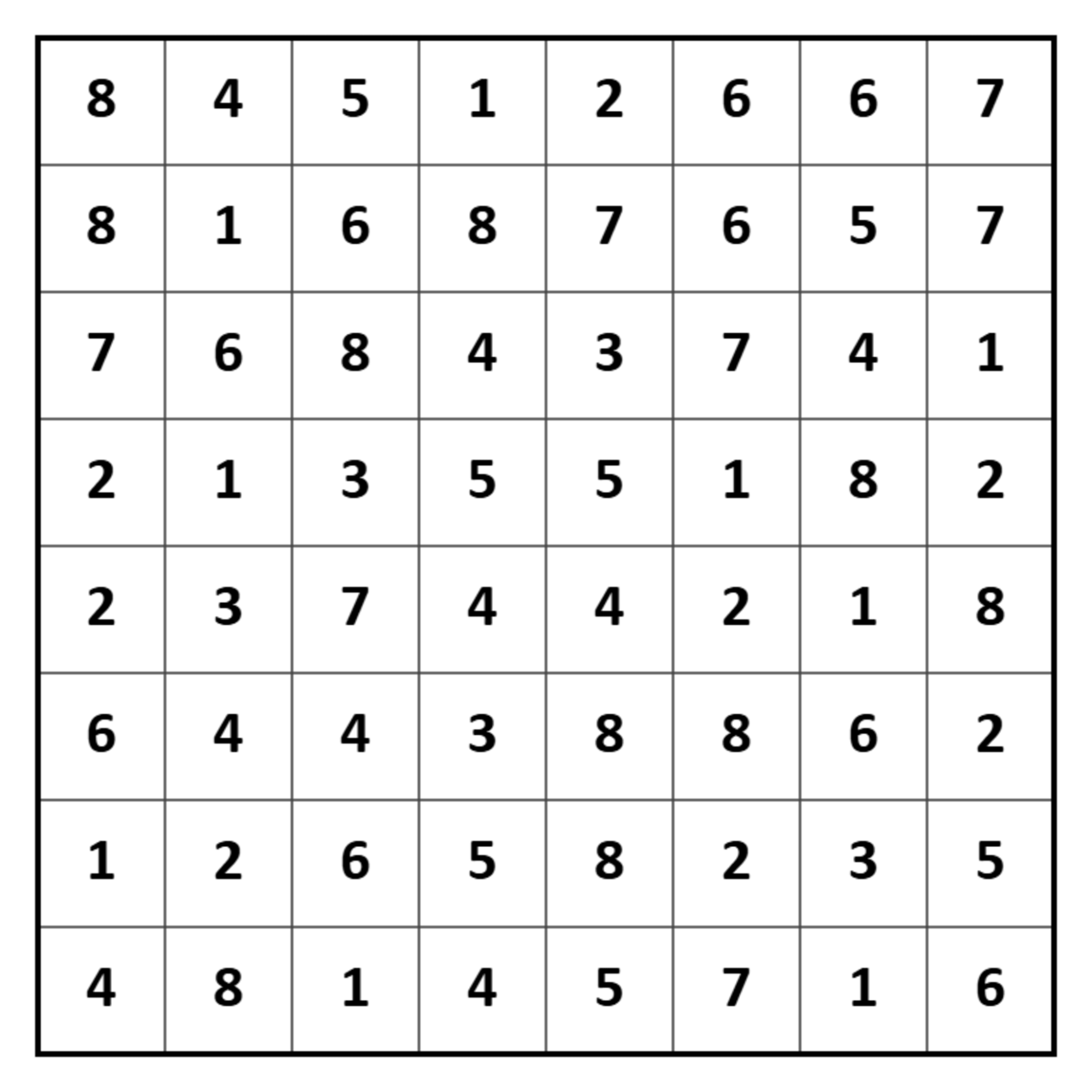
Let’s start with R6C5. In C6, we can see the pattern 2 8 2. As we mentioned earlier, when a number is placed between two identical numbers, in this case an 8 between two 2s, that middle number must remain unshaded.
At least one of the two 2s will eventually have to be shaded. Because two shaded cells can’t touch vertically or horizontally, the 8 between them must stay unshaded.
This means that every other 8 in the same row and column as that unshaded 8 must be shaded. So we can shade the 8 in R6C5.
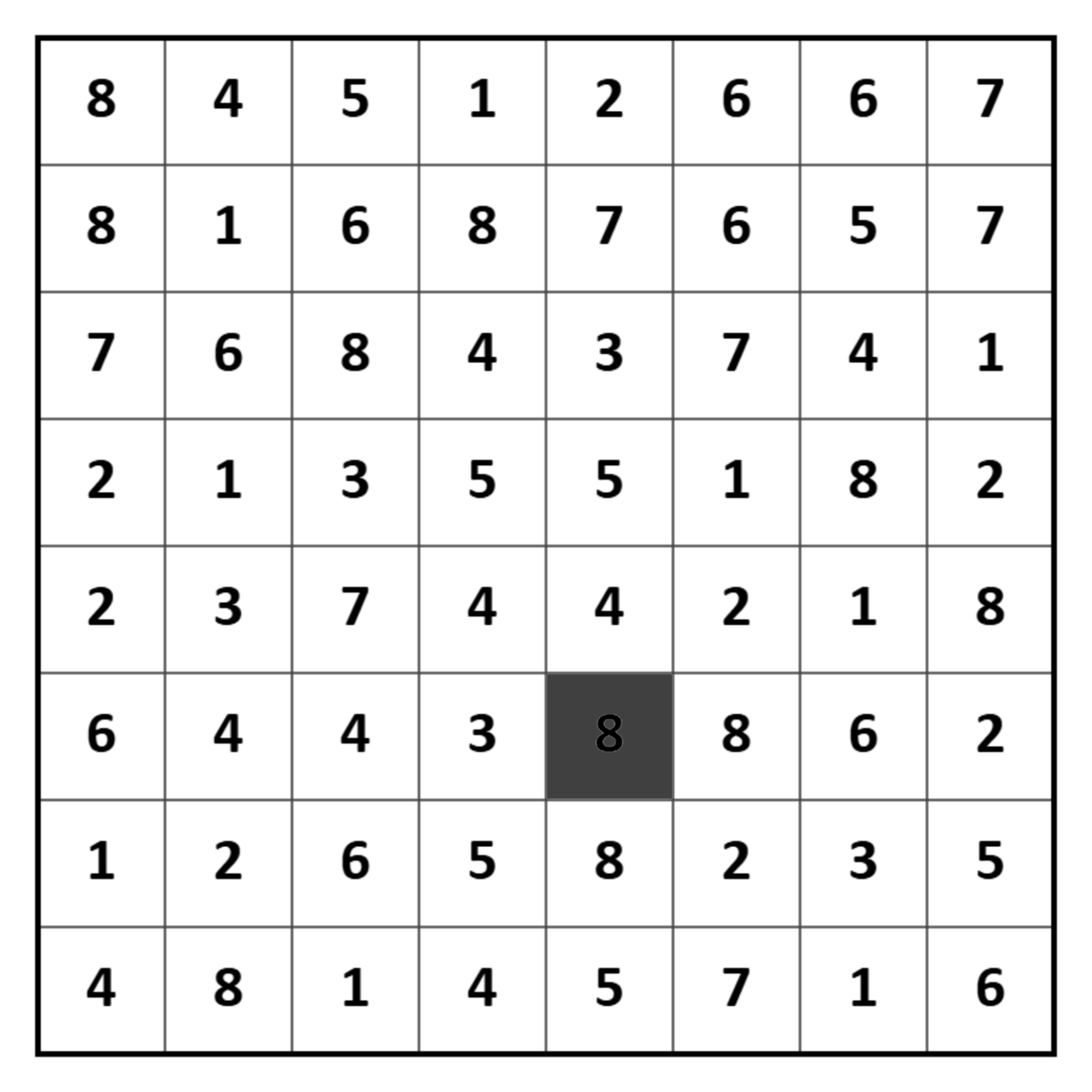
After this, we can use the rule that two shaded cells can’t be next to each other to shade the 4 in R5C4, and then the 5 in R4C5.
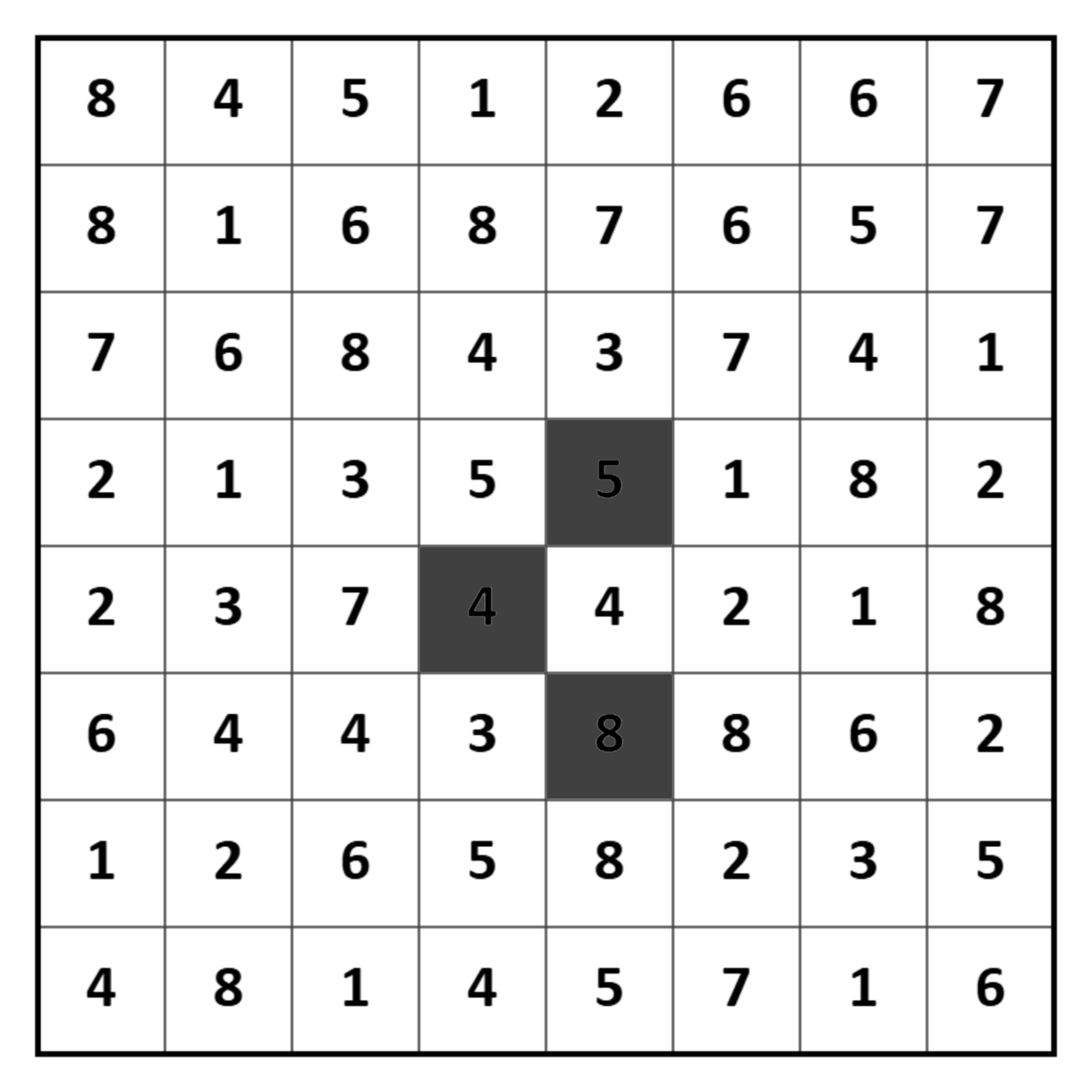
Now we can use the rule that all unshaded cells must remain connected vertically and horizontally. From this, we know that the 2 in R5C6 must stay unshaded.
That means every other 2 in the same row and column must be shaded. So we can shade the 2 in R5C1 and the 2 in R7C6.
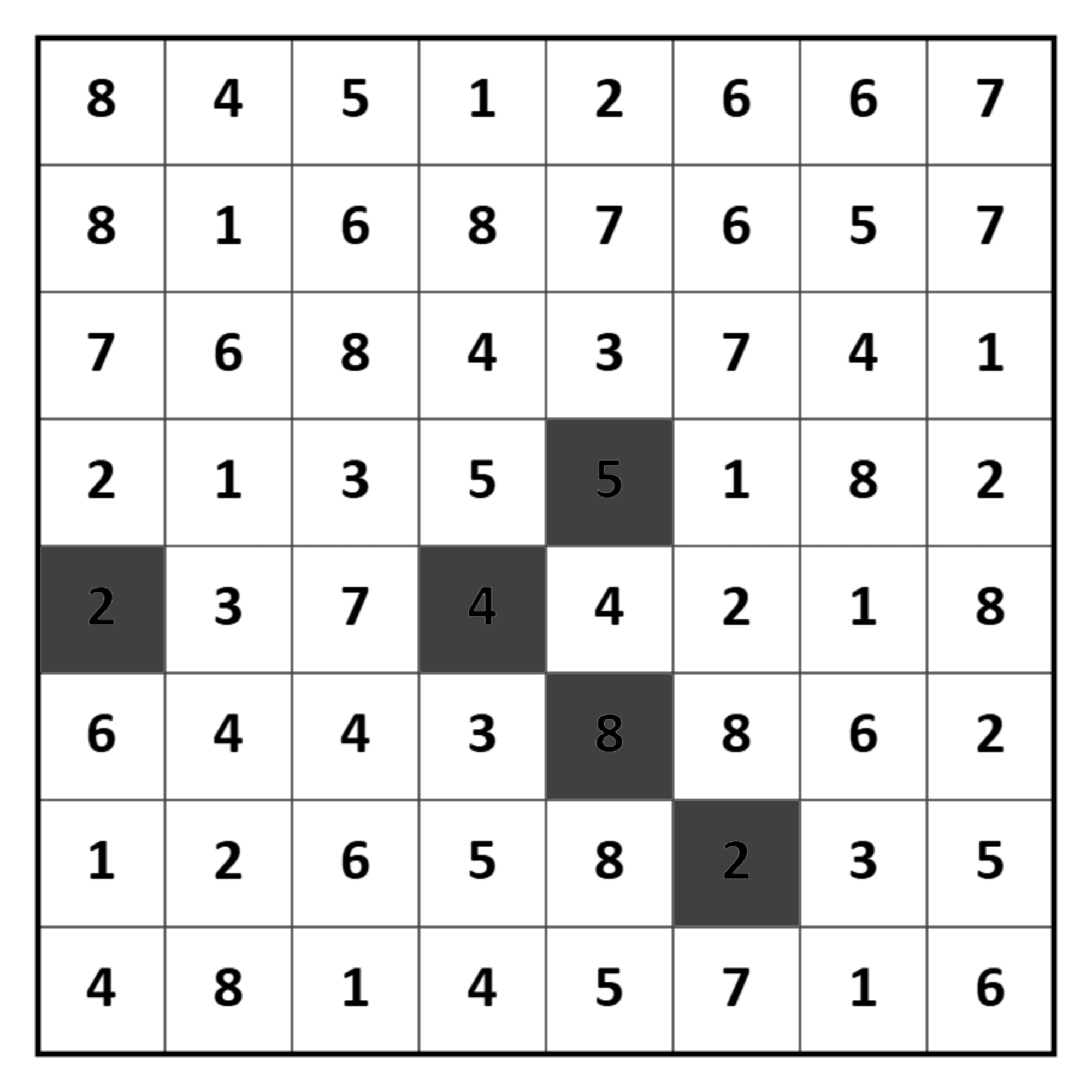
After this, we can again use the rule that two shaded cells can’t be next to each other. This allows us to shade several duplicate numbers whose other matching cells are blocked by already shaded cells, including the ones in the last three columns.
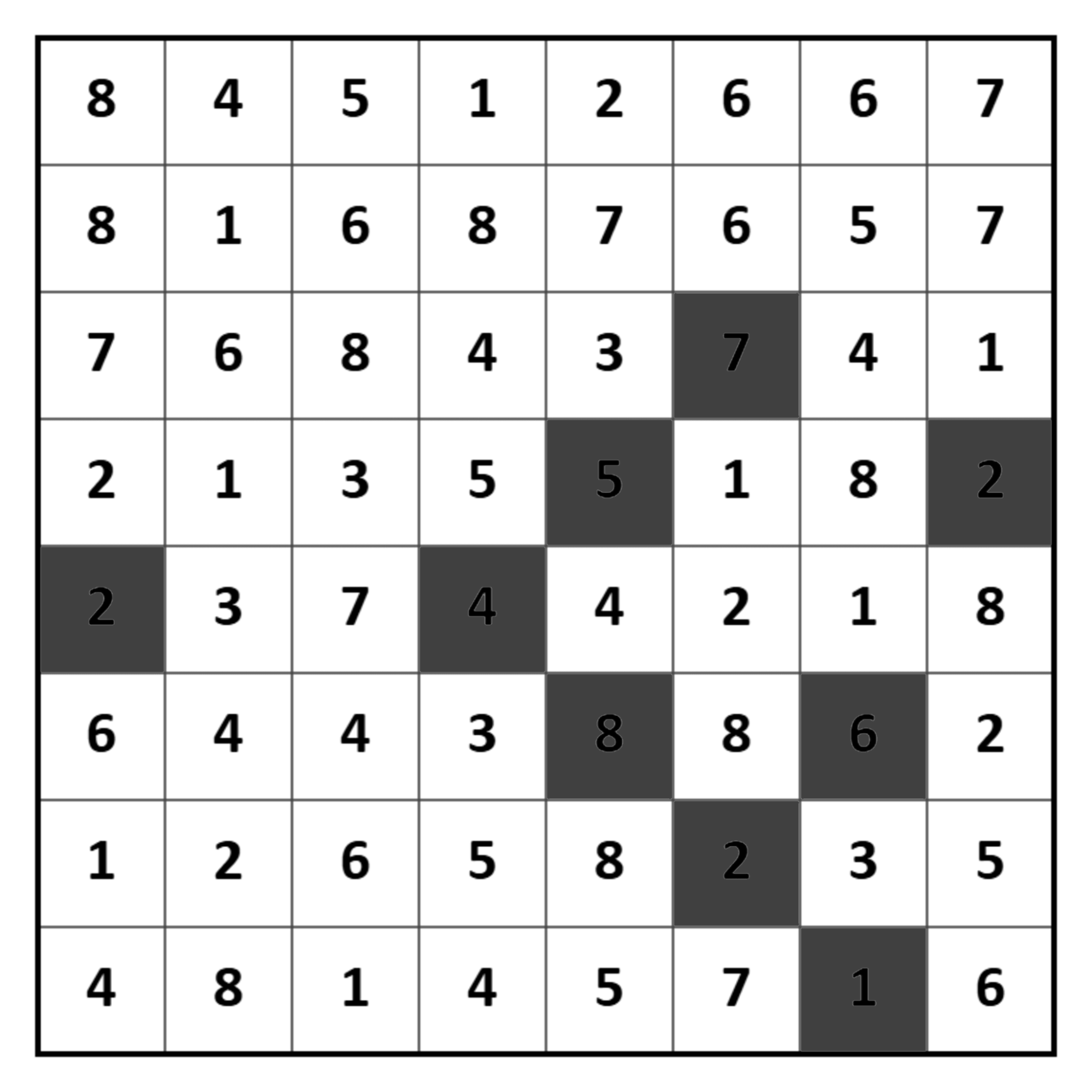
And as we continue shading cells, we once again reach an important connectivity deduction at R6C4. The 4 in this cell can’t be shaded because doing so would cut off part of the unshaded area and create a separate island of unshaded cells.
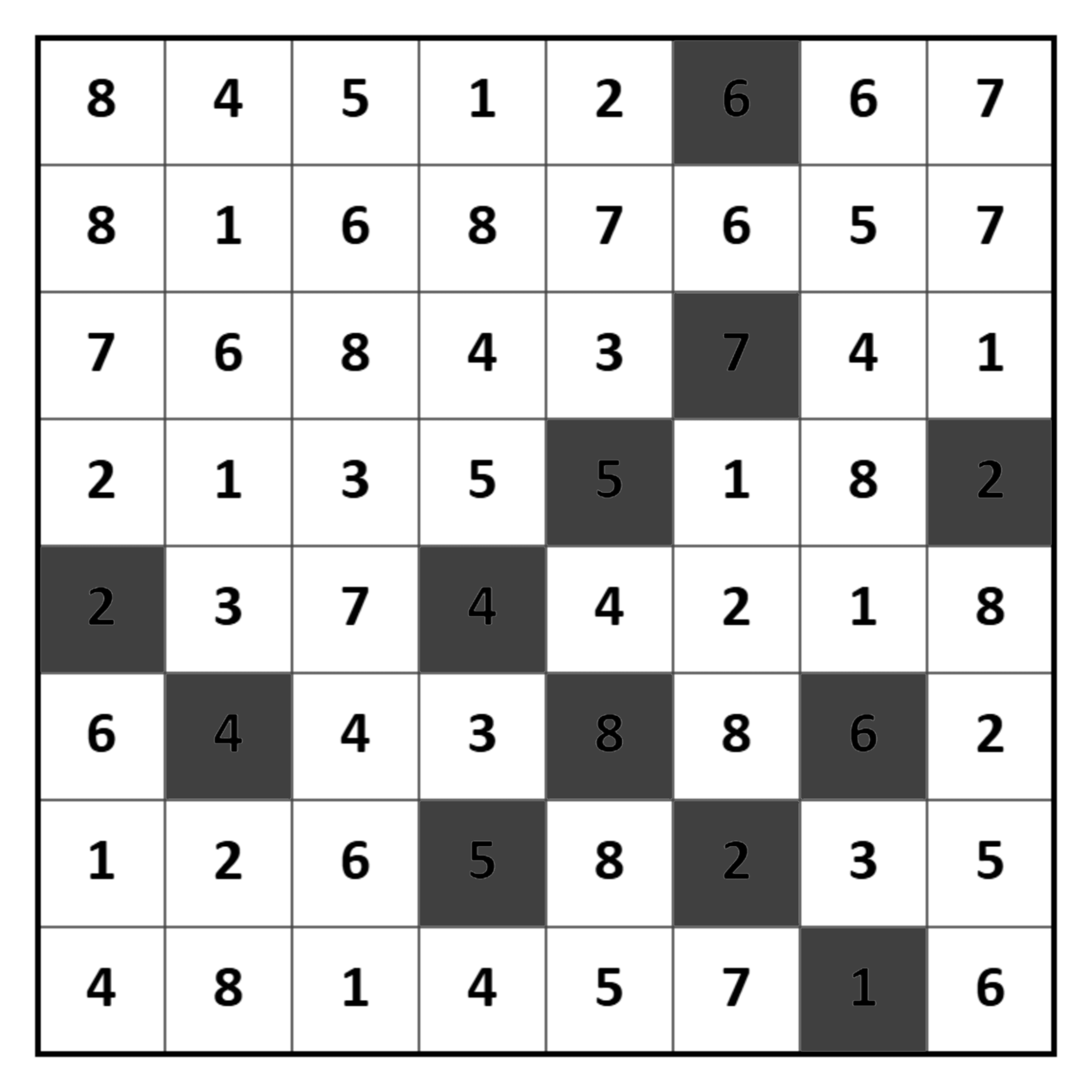
At this point, we can see that the last few columns are almost completely cut off from the rest of the grid, so we need to be careful with the cells in R2.
Shading either R2C5 or R2C7 would create an island of unshaded cells separated from the rest of the grid. Because of that, both of those cells must remain unshaded.
Since the 7 in R2C5 must stay unshaded, its duplicate 7 in R2C8 must be shaded.
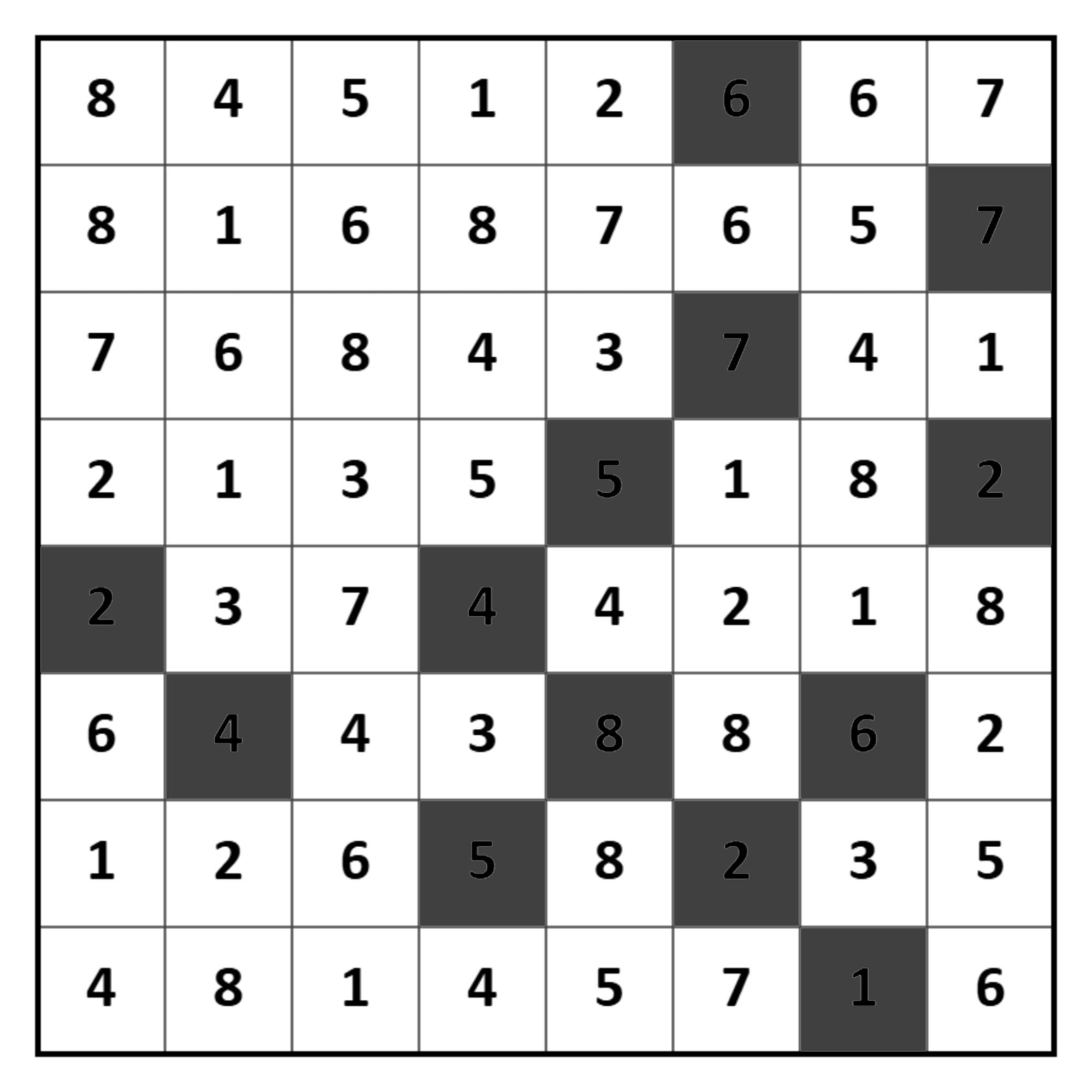
From this point on, the puzzle solves quite smoothly. We just need to find the remaining duplicates in each row and column. In every case, the matching duplicate is already blocked by a shaded cell, so we can determine which cell must be shaded without needing any more difficult logic.
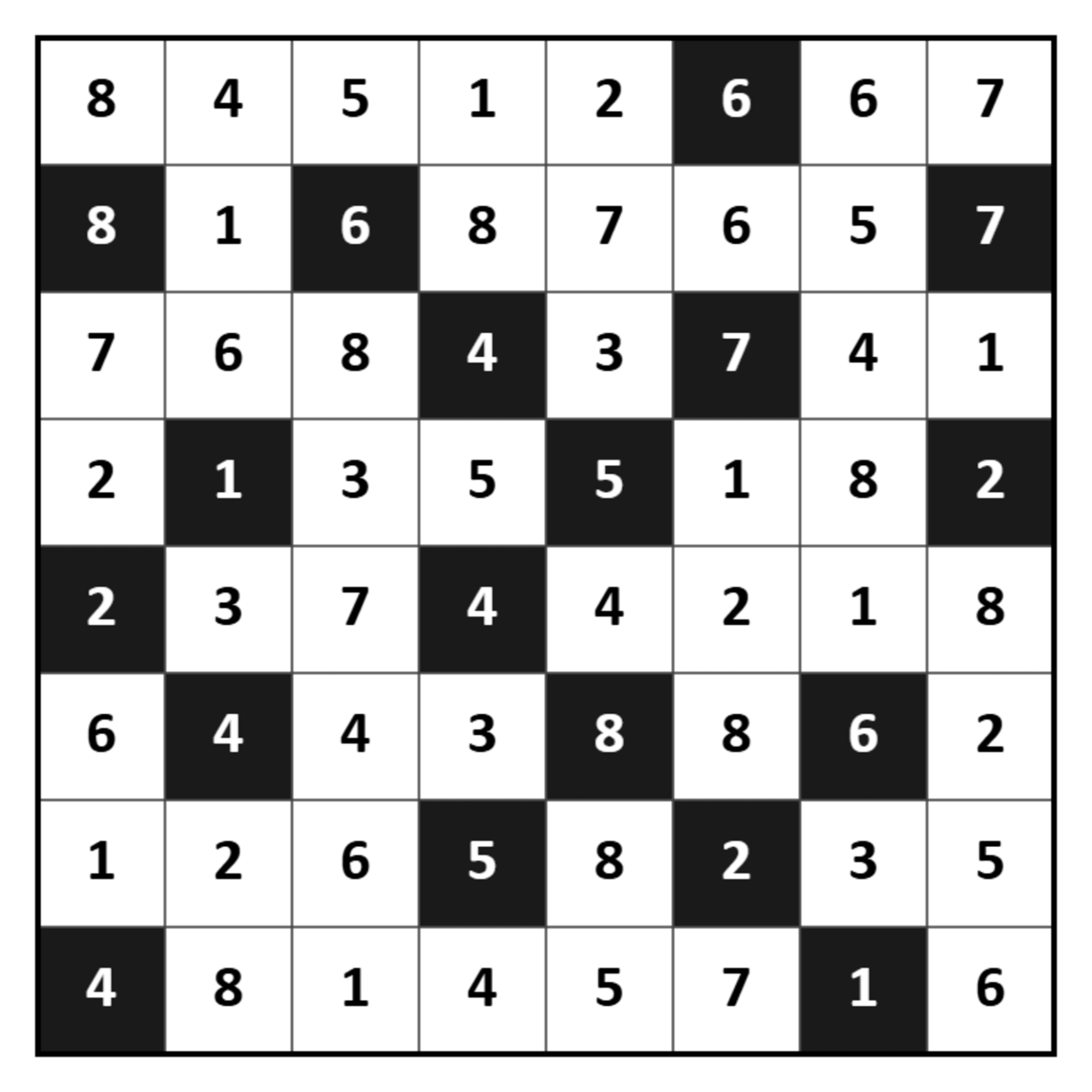
Easy, right? It wasn’t too difficult of a puzzle, but we still went through some of the basic solving techniques you will use in Hitori.
Variants
Because of the specific nature of Hitori, you don’t see quite as many hybrids and variants as you do with puzzles like Sudoku. Its rules are a little harder to blend naturally with other puzzle types. I tried creating a hybrid with Sudoku myself, but it still needs some adjustments before it becomes really fun to solve.
In puzzle competitions, however, Hitori often appears with modified rules designed to catch experienced solvers off guard. You can find versions with domino-style grids, non-consecutive rules, or other additional restrictions that change how the usual Hitori logic works.
Hitori may not be the puzzle that gives you the biggest brain workout, but it is definitely a great one when you want to kill some time and relax while shading cells. It is simple enough to solve casually, but still has those little moments of logic that make it fun.
As always, I’m leaving you with a puzzle so you can test your skills.
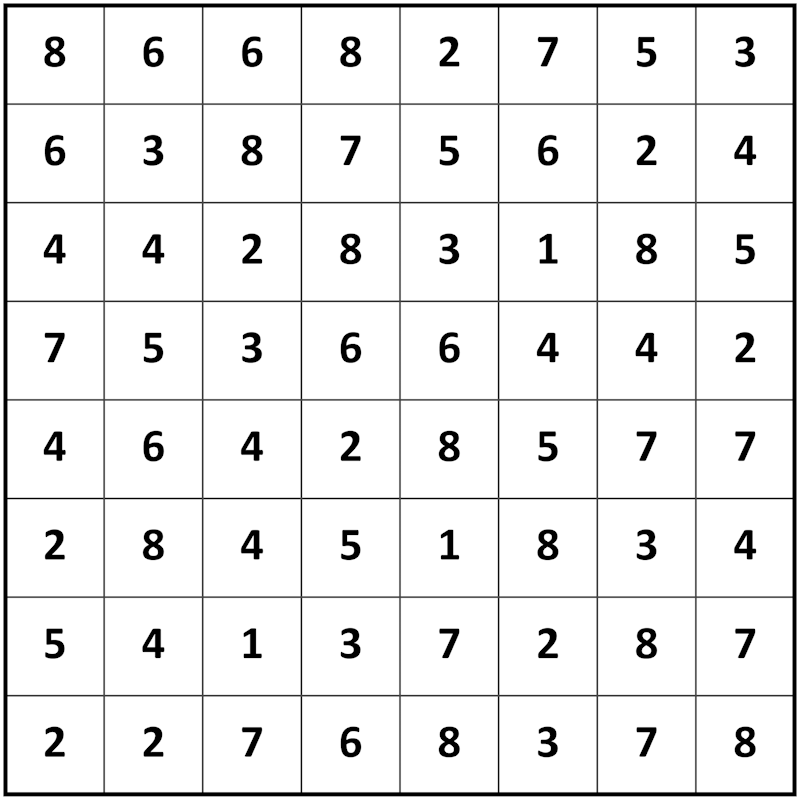
Download the reader puzzle (PNG)
Happy puzzling!