
This is the first part of what I hope will become a series of introductions to different types of logic puzzles, complete with small tutorials on how to start so you can map out your own solving strategies. Everyone is unique, and everyone's brain works differently. There is no "one-size-fits-all" strategy when it comes to solving these puzzles, but the starting points are quite often the same.
The first puzzle in this series is “Easy as ABC”—though in my own collections, I often call it “First Sight.” I sometimes get asked why I use my own custom names instead of the more common ones. The answer is simple: I am always aiming to create a story around these puzzles. I want to connect them into a cohesive experience rather than just dumping a random collection of grids on you (though, when time runs tight, it admittedly turns out that way sometimes!).
But let’s dive into the main topic.
The Origins of “First Sight”
I picked this specific puzzle because it was one of the very first games I was introduced to after Sudoku many years ago, handed down to me by a truly great, seasoned puzzle creator. I was incredibly lucky to have that opportunity.
“Easy as ABC” is a brilliant introductory puzzle. In its absolute basic form, it’s a 3x3 grid using the letters A, B, and C, with zero empty spaces.
The Rules: > In every row and column, you must place the letters A, B, and C exactly once. Your only clues are the letters printed on the outside of the grid. These clues indicate the very first letter that appears in that specific row or column when viewed from that direction.
It is incredibly quick to learn, but it immediately trains your brain where to look and what kind of deductive logic to use. Simple, right?! Well, yes—but it can get really complicated!
Stepping It Up: The 4×4 Grid
Let’s skip the 3×3 version; it won’t be challenging enough for you. Instead, let’s go one step further to a 4×4 grid.
We are still only using the letters A, B, and C, but this time, one cell in every row and column must be left completely empty. This single tweak makes a massive difference. It’s still an easy level, but it introduces a real challenge depending on how many outside clues are presented.
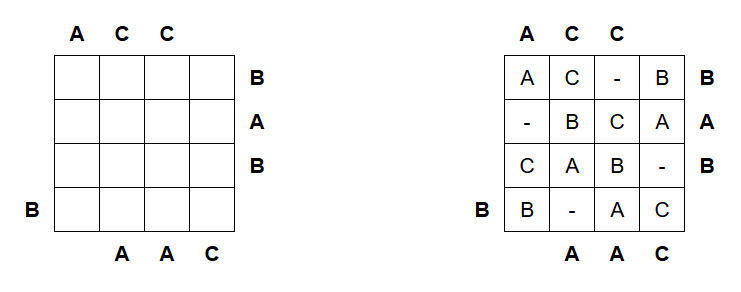
How to think through the grid:
Look for the crowded lines: The first row is a great start. From the top, you have almost all the starting letter clues visible.
Deduce the missing pieces: Because there are A and C clues looking down every column except the last one, we can deduce positions instantly. Even without a ‘B’ marked as the first letter from the right for that top row, we can logically determine that B must sit in the very last position of the first row, and A must take the first position.
Trace the lines of sight: Looking at the last column, we can use that exact same perspective logic to lock down the positions of C and A. This completely fills the last column, which reveals our very first empty cell in the last cell of row three.
The domino effect: Because we found that empty cell, we know the remaining cells in that row must be filled, meaning the first available slot from the right has to be B. Directly underneath this B, the outside clue tells us the first letter seen must be an A, so we place an A in the cell below it. From there, you can easily cascade down to fill the last row and clear the rest toward the top.
Pro-Tip: In harder puzzles, if you manage to lock down two of the same letters, it is always worthwhile to immediately scan the other rows and columns for interactions with that specific letter.
Your Turn: The 5x5 Exercise
Now for your exercise, I am giving you a 5x5 grid. This one contains two empty spaces per row and column, but I have included all the outside clues to make the onboarding simpler for you.
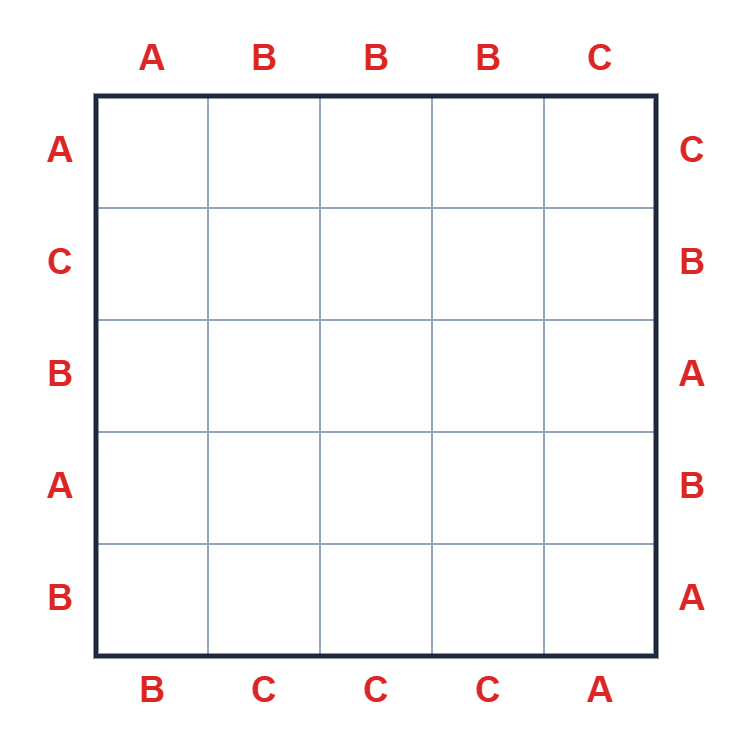
If you are a first-time solver, I think 5 minutes will be more than enough to cross the finish line. I hope trying it for yourself helps you visually experience what I was trying to explain above!
The Wild World of Variants
Once you master the basics, this puzzle type scales beautifully:
The ABCD Expansion: The most common variation steps up to a 5×5 or 6×6 grid using the letters A, B, C, and D, which kicks the difficulty way up. The sheer number of variations and empty space combinations you can create makes things incredibly challenging.
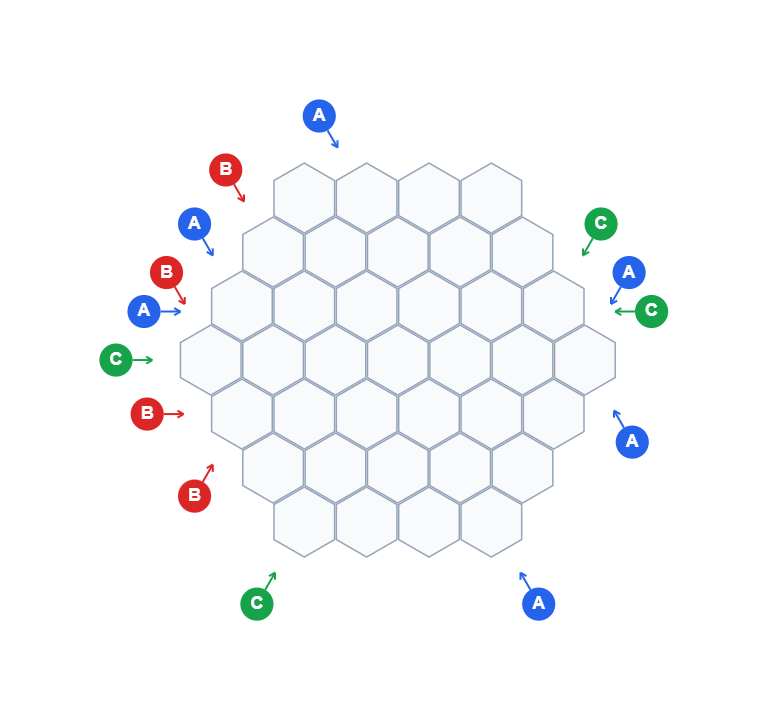
The Hexagonal Grid (The True Test): Another variation you will find out there uses a hexagonal grid. This one is a trip for the brain. The logic rules remain elegant, but human brains are simply not wired to naturally think in six directions simultaneously!
You might notice when you solve Sudoku X (which adds just two diagonal constraints) that the difficulty spikes. Well, the hexagonal grid is the absolute queen of all grid puzzles. Try one out and see how your brain keeps up with the geometry!
I hope I managed to give you a great introduction to this puzzle. Keep an eye out for “First Sight” grids in my upcoming collections and all over the web. It really is a phenomenal logic experience, and I hope it becomes your favorite new candidate for life beyond the standard Sudoku grid.
I’m always here to discuss puzzles, strategies, or logic design. If you get stuck, have a question about a specific move, or just want to chat about a grid, drop a comment below—I’d love to hear how your brain tackled the challenge.
Happy solving!